there are many reasons why parents want or need to use family day care. Our offer is for everyone who is looking for a homely environment and sees our work as a sensible and important complement to their child’s development.
Our top priorities are warmth and security, supporting each child’s individual abilities and supporting the development of their personality. Children find this environment with us from birth, and we accompany them until they start school. This usually gives us an age-mixed group in which the children learn from one another. In the small group of at most 10 children, your child settles in quickly and feels at home.
On this page we describe our rooms, everyday life and the goals of our educational work.
Who we are and where we are
About us
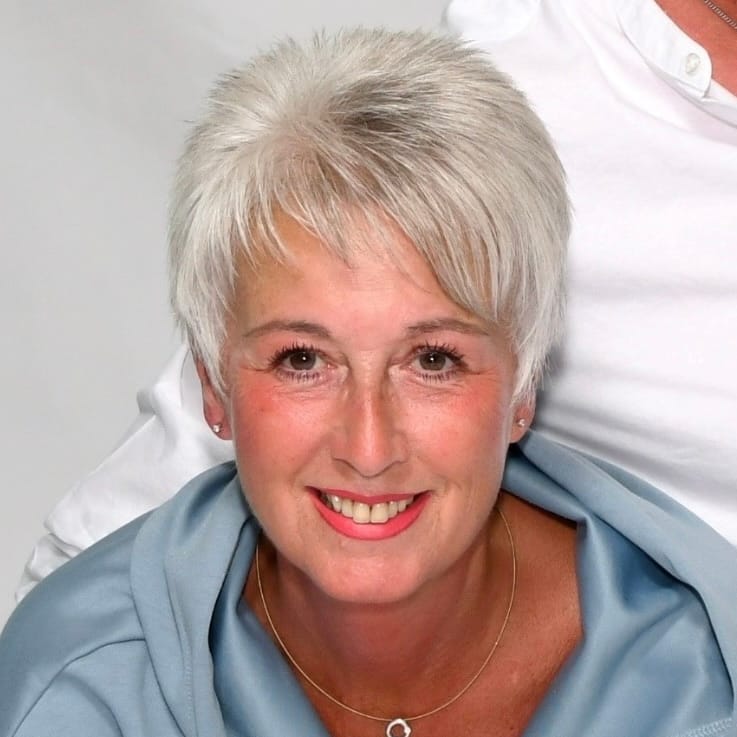
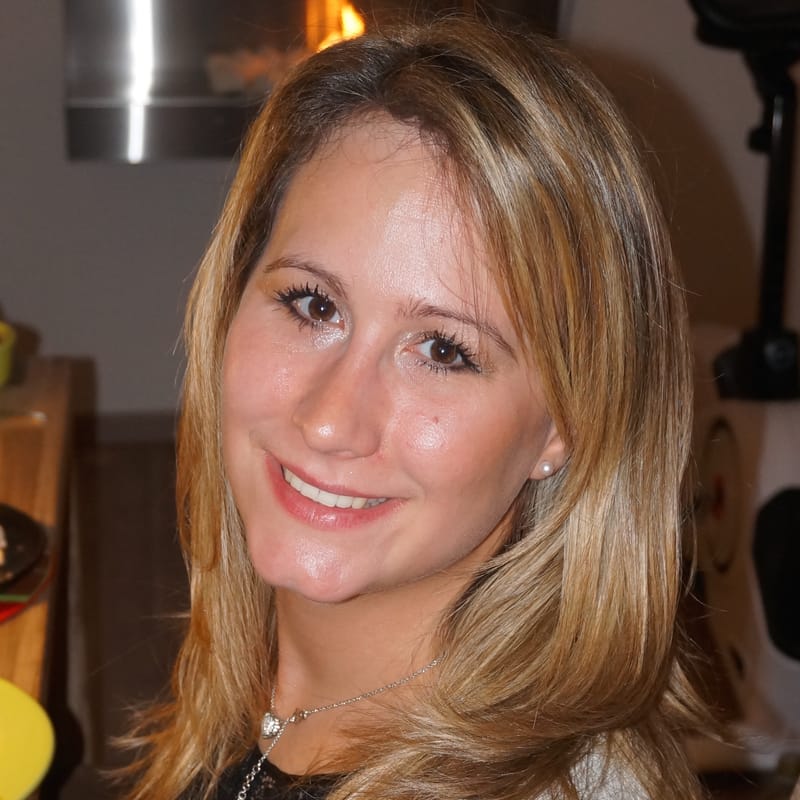
Suzanne has worked as a childminder since 1985, since 1995 in a large family day care setting (Großpflegestelle), and opened the Kinderladen in 2005. Jennifer has been part of the team since 2005. Together we are known as Kindertagespflege Windelflitzer: two childminders who work together.
Suzanne Busch
I was born in Berlin in 1962 and first trained as a medical assistant. I have worked as a childminder since 1985, since 1995 in a large family day care setting (Großpflegestelle), and in 2005 I opened the Kinderladen. I am married, have two grown-up daughters and four grandchildren. I successfully completed my training as a certified childminder with the advanced certificate and obtained recognition as an early-years educator. I have also worked closely with the youth welfare office for many years. My hobbies include shopping, dogs, long walks and cooking.
Jennifer Köster
I was born in 1984 and live with my partner and my two daughters, who were born in 2009 and 2015. I have worked as a childminder at Windelflitzer since 2005. I completed my basic certificate in 2008 and my advanced certificate in 2010, and have been recognised as an early-years educator since 2015. My hobbies include crafting, my dog, gardening and baking bread.
What is special about the Windelflitzer are our two miniature poodles Puma and Louie, who bring us and the children a great deal of joy.
The rooms
Our family day care is located in Berlin-Schöneberg. The large corner premises of 105 square metres are only about five minutes from Innsbrucker Platz. Three bright rooms are divided into a smaller and a larger play room and a sleeping room. They are lovingly designed and leave the children room for creativity and for letting off steam.
Play rooms
This is where we play, paint, craft and eat. A cosy corner protects the very little ones or serves older children as a reading and cuddle corner. There are regular music and movement games that promote motor skills and thinking. The sleeping room is used for reading aloud, changing, resting and for the afternoon nap.
Hallway
The long hallway connects two rooms into a loop and invites children to run and ride their toy cars. Child-friendly works of art create a warm, welcoming atmosphere.
Washroom
At two child-height washbasins even the youngest can wash their hands and brush their teeth. Two toilets make potty training easier. Colourful tiles turn personal hygiene into a playful routine.
Kitchen
In our kitchen we cook fresh every day, balanced and with fresh, preferably regional ingredients. The children help with the preparation and learn playfully how dishes are made in regular cooking and baking sessions.
Our everyday life
General conditions
Opening hours
Monday to Friday from 8.00 am to 4.00 pm. We are closed on public holidays in Berlin.
Arrival
Please bring your child by 9.00 am so that we can start the day together.
Cover
If one of us is ill, we cover for each other. If a longer absence should ever occur, we look for a solution together with you that meets your child’s care needs.
Reporting sickness
This is possible by email or phone until 9.00 am. Please do not bring sick children.
Pick-up
If a child falls ill during the day, we inform you by phone so that the child can be picked up as quickly as possible. If you cannot pick up your child yourself, please tell us in writing who may do so.
Clothing
Please dress your child for the weather and the season, with suitable headwear. In summer please apply sunscreen in the morning.
Nappies and spare clothes
Please hand in nappies regularly, plus a complete set of spare clothes for the season. Please check regularly that the clothes are the right size and complete.
Closing times
We set them at the latest in December of the previous year and announce them in writing. Training days are announced at least four weeks in advance.
Daily routine
8.00–9.00 am
Arriving
Welcome
Breakfast
Settling in and free play
9.00–11.00 am
Playing and discovering
Morning circle (singing, dancing, making music, storytelling)
Free play, crafts, theatre
Yoga, exercise and sports
Outdoor play, weather permitting
Outings, for example to the zoo, the aquarium or the children’s cinema
Educational activities
11.00 am–12.00 noon
Lunch
Shared, freshly cooked lunch
Personal hygiene
reading aloud
12.00 noon–2.00 pm
Rest time
Nap up to the age of 3
Quiet time with books and stories from the age of 4
Pre-school from the age of 5: quiet work, pre-writing exercises, numbers, letters, board games
2.00 pm
Afternoon meal
Snack with fresh fruit and vegetables
2.30–4.00 pm
Winding down
Free play
Chalk drawing
Pick-up
Meals and nutrition
Healthy, balanced nutrition has a great influence on physical and mental development. The first years of life in particular shape eating habits, so we introduce the children early to healthy eating and drinking and show them that preparing food is fun, too.
Meals are a shared ritual at the table and always begin in the same way. The food is on the table and the children help themselves. That way they decide how much they want to eat and learn to judge quantities along the way. The priority is the joy of independence.
Besides lunch there is breakfast in the morning and a snack with fresh fruit and vegetables in the afternoon.
Water is always within reach. Sweets, cake or ice cream are for special occasions such as birthdays, carnival or farewells.
Example of a weekly menu
Monday
Pasta with tomato sauce
Tuesday
Chicken broth with fresh vegetables and rice
Wednesday
Potatoes with spinach and egg
Thursday
Jacket potatoes with quark
Friday
Rice pudding
Development and health
Observing and documenting
Observation is the core of our work, because it is the only way to recognise the needs and interests of the children. For each child we document development with BeoKiz, Berlin’s method for observing, documenting and assessing development. “Child-centred” means: your child, with their needs and actions, is at the centre. We observe in everyday life and continuously, and we look at overall development, not just individual areas. This way we recognise strengths, talents and any need for support, and can tailor our suggestions to your child individually.
We record your child’s learning processes in a portfolio throughout the whole care period. Your child contributes to it, and you are also invited to help shape it. At the end of the care period your child receives the portfolio.
Development is assessed using the “Berlin Milestones”. At two and a half and four and a half years, the findings on language development are transmitted fully anonymised and digitally to the Berlin Senate Department for Education, Youth and Family. It is not possible to trace them back to your child, and the requirements of the General Data Protection Regulation are met.
Our observations are the basis for the development conversations with you. In the last year before primary school we discuss with you the learning documentation, which shows the educational and developmental steps achieved so far based on the “competences for the transition to primary school”. We pass it on to the primary school only with your prior written consent.
We work according to the Berlin Educational Programme (Berliner Bildungsprogramm).
Settling-in period
The settling-in period takes place step by step and gently, adapted to your child. It usually lasts about four to eight weeks. In a detailed introductory conversation we discuss the process in advance and exchange important information.
First week: A caregiver (mother, father or someone else) accompanies the child. There is no attempt at separation yet. The caregiver sits quietly in a corner and gives the child their full attention without taking the initiative. We make contact by sitting down with them, playing or singing together.
Observing: We give the child security, do not push, and respond to their needs together with the parents.
New caregiver: The child chooses a new caregiver from among us, who builds up the relationship.
Separation: As soon as the child is playing, the separation phase begins. It is very important that the caregiver says goodbye. Anyone who leaves unnoticed risks the child looking for them later and panicking. At first the caregiver stays nearby for about half an hour so they can be called back if necessary.
Extending: Once the child has built an emotional bond and can be comforted quickly, we extend the time step by step.
The settling-in period is complete when the child generally feels comfortable and safe. There will still be difficult days now and then. That takes understanding and time with the parents.
A good relationship between you and us is crucial for your child’s well-being. A child can only feel at ease if they experience us treating one another with respect and interest. That is why a regular, honest exchange is important to us, in quick chats at the door and, on request, in development conversations. Your child’s development and needs are at the centre. We work out shared goals and pursue them hand in hand.
Illness
For certain illnesses, children may not attend the setting under the German Infection Protection Act, for example scarlet fever, whooping cough or chickenpox. You can find more information in the current infection protection leaflet.
Even a seemingly harmless cold can sometimes be a challenge in family day care. If your child can no longer take part in the group’s day because of a runny nose, they belong at home with their parents. We tell you what we have observed and discuss what is best for your child and the group. A cold spreads quickly because children of this age put everything in their mouths.
After a fever, your child may only return once they have been fever-free for 24 hours.
After diarrhoea or vomiting, they must be symptom-free for 48 hours.
Please bear in mind: a day in family day care is like a work shift for your child. Managing it is different from recovering quietly at home with mum or dad.
Child protection and our approach
Child protection concept
The UN Convention on the Rights of the Child has applied in Germany since 1992 with the status of a federal law. The Federal Republic has thereby committed to respecting, protecting and promoting the rights of children; everyone under the age of 18 is regarded as a child. The best interests of the child must be a primary consideration in all state decisions that affect children. (Source: German Federal Ministry for Family Affairs, Senior Citizens, Women and Youth)
This is how we put the ten most important children’s rights into practice in our family day care:
Equality
All children have the same rights; no child is disadvantaged. It makes no difference what nationality, language, skin colour, religion or culture a child has, which gender they identify with, whether they have a disability or whether the family has little or a lot of money.
Health
Children have the right to grow up healthy. This includes a balanced breakfast, lunch and afternoon meal, always having something to drink, daily exercise in the fresh air in all weathers, gentle care and security. If a child is injured, they receive medical attention.
Education
Children develop of their own accord and at their own pace. We do not steer or speed things up, but offer age-appropriate play and learning materials and support gross and fine motor skills. Language is stimulated by accompanying speech, singing and reading aloud.
Play and leisure
Children may play freely and without purpose and choose for themselves what they need. They may sleep, rest, withdraw, paint and make music – for example in the singing circle: they may join in, but do not have to.
Freedom of expression and participation
Children may have a say and freely say what they think, wish for and suggest.
Protection from violence
Every child has the right to a non-violent upbringing, to appreciation and to protection from abuse and exploitation (see § 8a SGB VIII).
Parental care
All children receive the same care and attention. We stay calm even in stressful situations, respond to each child’s needs with patience and empathy and treat them respectfully and with appreciation.
Protection of privacy and dignity
We respect the children’s privacy, for example when changing nappies, on the toilet and when changing clothes, and respect it when a child wants to withdraw. Every child is treated with mindfulness and empathy.
Protection in war and for refugees
Children of refugees are cared for and supported like all other children: safely, lovingly and protected.
Special care in the case of disability
For us, inclusion also means caring for children with a disability or chronic illness. Before care begins we know what support is needed and, within our possibilities, enable the children to develop and thrive.
Children’s participation
The foundation of child protection is children’s participation. We want to foster strong, self-confident children who can express their wishes and needs and set boundaries. Children show their decisions through language, the youngest through facial expressions and gestures. Even one-year-olds like to vote: the right to participation is not tied to age or stage of development.
Participation is important for personal development, for making one’s own decisions, for autonomy and for learning democracy, because you learn it by experiencing it. It is important to us to take children’s statements and opinions seriously, to let them stand and not to try to convince the children of our own opinion.
We give room for participation through:
needs-oriented action, depending on the child’s age, stage of development and abilities
growing into democratic values, in which children take responsibility for their actions and older children also for the group, for example by helping in everyday life
a culture that is forgiving of mistakes: mistakes are part of learning, for the children just as for us
Everyday examples:
Where to sit at breakfast
What and how much there is at lunch
Choice of songs and wishes in the morning circle
Outing destinations (bird park, woods, fields, garden)
Getting dressed and undressed
Choosing colours, picture cards and books
Sleeping or just resting (especially for older children)
Nappy or potty, without pressure and only with the child’s involvement
Crawling games: each child decides whether they want closeness
Care, looking after the child and necessary rest take priority, for example when a child needs changing or should sleep.
Non-violent upbringing
Every child has the right to a non-violent upbringing. Physical punishment, psychological injury and other degrading measures are not permitted (§ 1631(2) of the German Civil Code). This applies to all adults, including childminders. With us, violence, physical punishment, psychological injury and degrading measures have no place in our educational work.
The best basis for living together peacefully is a good relationship with the children, based on trust, security, safety and verbal and non-verbal communication. We give the children recognition and help them to process and understand their experiences.
If a child behaves inappropriately, for example by taking a toy away, a good relationship helps the child to stop and to learn better ways instead. If a child has harmed another, for example by pushing, biting or hitting, we help them to make amends. We support constructively and do not rely on exclusion as punishment, which makes everything worse and tends to cement the unwanted behaviour. A forced apology remains an empty phrase as long as the child cannot yet see the other’s point of view.
Self-evaluation and self-reflection
A critical look at our own work is also important to us.
Self-evaluation means that we systematically observe, analyse and evaluate our work with the children in order to consolidate or improve it. We look over our own shoulder, so to speak.
Self-reflection means that we consciously reflect on what we have experienced in order to understand it better. Thinking alone is not enough: we check and compare and look at the situation from different angles.
We want to learn from experiences and mistakes, gain better access to our own actions and feelings and find better solutions in the future. This includes tackling problems in a solution-oriented way, gaining self-knowledge, questioning things, reflecting on our own feelings and thoughts and accepting other people’s behaviour better. By working together we support one another with constructive criticism and praise and grow together.